2014年2月25日 星期二

International Business ( Week 5 )


TODAY'S TOPIC IS INTERNATIONAL BUSINESS


I
nternational business is the creation of a Global Market.
Exporting products and services to an other counties.


It refers to all those business activities which involve cross border transactions of goods, services, resources between two or more nations. Transaction of economic resources include capital, skills and people. For international production of physical goods and services such as finance, banking, insurance and construction.


For example :


Coca - Cola  


Coca‑Cola  is sold in more than 200 countries throughout the world, so it's difficult to think of a country where it's not available. Since 1900, Coca-Cola have worked with local partners who bottle and sell Coca‑Cola products. By working with these partners, Coca‑Cola has been able to grow into a drink that's bottled locally but enjoyed around the world. There are 1.7 billion servings of Coca‑Cola sold every day in the world.


 Coca-Cola corporate many other companies in order to export the  products to different countries. The Coca-Cola Export   Corporation is responsible for the strategic marketing, brand   management, packaging strategy, consumer promotion,   advertising, public relations and market research. 


To sum up, international business means selling the products internationally to many different countries like Coca-Cola. It sells drink to other countries instead of just in America. There is no where that we can't find Coca-Cola and it is a very successful international business in exporting drinks to more than 200 countries by the export corporation.


2014年2月15日 星期六

Organisational Strategy ( Pestel ) and Stakeholers ( Week 4 )


Organisational Strategy ( Pestle ) and Stakeholders


Organizational strategy is the creation, implementation and evaluation of decisions within an organization that enables it to achieve its long-term objectives. ( e.g. Pestle )


Pestle could be defined by 6 different terms :

1.  Political
  • Government Stability
2.  Economic
  • GNP Growth
  • Interest Rate Rise
  • Rises in Indirect Taxation ( such as VAT )
3.  Social
  • Geographical Mobility
  • Social Mobility
  • Lifestyle Changes
  • Demographic Changes
4.  Technological
  • R&D Related Development
  • Obsolescence
5.  Legal
  • Health & Safety Development
  • EU Directives
6.  Environment
  • Green Issue
"GLOBALISATION"


Stakeholders are that which can affect or be affected by the actions of the business as a whole.
Different stakeholders will have their own values, expectations and objectives which they want to achieve.


Organisations need to understand the power a stakeholder has and the influence the stakeholder may exert over business objectives, how it acts and behaves :

  • can disrupt the business's plan
  • causes uncertainty in the plans
  • the business needs and relies on the stakeholder


Sources of power for INTERNAL STAKEHOLDERS :
  1. position power within hierarchy
  2. influence
  3. control of key resources
  4. specific knowledge or skills
  5. knowledge of the environment in which the organisation operates
Sources of power for EXTERNAL STAKEHOLDERS :
  1. resources dependence ( e.g. a supplier )
  2. knowledge and skills critical to success of the organisation
  3. ability to gain attention through local or national media
  4. coalitions between stakeholders


Stakeholder Analysis :
The technique used to identify the key people who have to be won over.

Step 1 : identify the stakeholder
Step 2 : prioritise the stakeholder and map out the stakeholder
Step 3 : understand the key stakeholder -- how will they be             effected?


STAKEHOLDER MAPPING :


  • high power, interested people -- people you must make sure you satisfy
  • high power, less interest people -- put some effort in but not too much to put them off
  • low power, interested people -- keep adequately informed ( these people can be helpful with detailed work )
  • lower power, not interested people -- monitor but do not communicate with too closely


2014年2月9日 星期日

Internal Environment & Micro Environment ( Week 3 )


Today's topic is INTERNAL ENVIRONMENT & MICRO ENVIRONMENT


Internal Environment is the conditions, entities, events, and factors within an organization that influence its activities and choices, particularly the behavior of the employees. Factors that are frequently considered part of the internal environment include the structure, objectives, culture, leadership, finance, people and technology.


First of all, the structure of an organisation is the key issues fro internal environment :
  1.  Lines of Communication -- the flatter of the communication, the faster responsible between the manager and the employees thus to increase the motivation in having quick reply from the manager.
  2. Job Responsibilities -- it states clear that what are the duties, purpose, responsibilities and working conditions of a job and also make sure that the organisation knows what the employees are actually doing.
  3. Departments -- more departments within an organisation could make jobs done more organisable as each department has the specific work force therefore can they can be more focusing, however, to many departments could affect the communications and the decision making because there will be too many ideas and each department has one manager so that its hard to be compromised.
  4. Management and Hierarchy -- less layer of hierarchy in management will lead to faster and more effective decision making.
  5. Centralisation & Decentralisation -- they are the two method of how an organisation is going to make their decisions, if the organisation is requiring centralisation, the decisions will make by the managers, on the other hand, the decisions will make by the employees and customers.


Secondly, the objectives that the organisation have will influence people act and the activities :

  1. Corporate ~ Department -- corporate objectives are the aims that the whole organisation wanted to achieve, for each department, the objectives will be more specific and small as different departments have to achieve their own objectives to be able to achieve the corporate.
  2. Divisional Objectives -- they are the objectives that set to achieve the corporate objectives.


The culture of an organisation is the way that things are and there are some factors that are going to affect the culture of the organisation :

  1. Bureaucratic -- this will be an external influence for organisations to enter the markets.
  2. Creative -- if the staff are creative, the culture of an organisation will tend to be more creative as many creative ideas will come along the production.
  3. Power -- it depends on which type of structure will be used in an organisation, centralisaed or decentralised, that means who are going be more powerful in the organisation, the managers or the employees.
  4. Fear -- what are the factors that the organisation is concerning about and therefore affecting its culture of what they should do to improve and what are the thing that they shouldn't do.
  5. Hard working -- if the staff are hard working in the organisation, the way that things are will be different, may become more effective as an example, also the productivities and profitabilities will be high.


The leadership will influence the organisational culture according to the leader's behavior, to decide if the organisation is going to be more autocratic or democratic.


Then, the financial availability of an organisation is going to affect the activities within the organisation :

  1. Investment Decisions -- they are going to decide which products will the organisation invest in and which one will be invested most money on.
  2. Investment Return -- if the return is not great, the organisation may decide to stop investing in the project or production
  3. Cash Flow -- it is the key factor of affecting the activities in the organisation because it is the money that flowing in and out within an organisation and the most financial problems are paid by the cash in the organisaiton, the cash is also used by paying the liabilities in the organisation so that without having enough cash, the activities in the organsation will be affected.


Also, the knowledge that people have will influence their behavior and how they will perform in their workforce, therefore :

  1. Training -- is important to improve staff's skills thus to improve their performance.
  2. Recruitment Methods -- is an organisation going to recruit people from external which will bring new ideas and new culture of people behavior or internal which promote the people within the organisation and will have well known of the organisational culture.


Finally, the development of technology influences the organisations :

  1. Research & Development -- rapid development in technology helps the research and development department to do research of what the customer needs and what they like and also to help in creating more good and services.
  2. Sales -- nowadays, organisations could sell their goods and services on the Internet, as a result of,  the sales will increase by selling products in different markets.
  3. Support Services -- this helps the managers to manage the staff more easily and make the communication become faster.


Micro Environment affects the organisaton directly, for example cost of leadership, differentiation and focus. They are the generic strategies.
The 5 Forces :

  • bargaining power of suppliers -- the power of suppliers to drive up the prices of your inputs
  • bargaining power of buyers -- the power of your customers to drive down your prices
  • potential threat of new entrants -- the strength of competition in the industry
  • substitutes -- the extent to which different products and services can be used in place of your own
  • competitive rivalry -- the ease with which new competitors can enter the market if they see that you are making good profits
To solve the problems, organisations can consider developing strategies which are the generic strategies and alternative directions ( Ansoff's Matrix ).
Also, organisations need to think of 4 factors :

  1. Strengths ( internal influences )
  2. Weaknesses ( internal influences )
  3. Opportunities ( external influences )
  4. Threats ( external influences )


In conclusion, there are many factors that influence the internal environment and the micro environment such as the objectives and the culture of the organisations. They should be aware of all the feature of the factors in order to find the solutions.


2014年1月25日 星期六

Organisational Design & Structure Functional Links ( Week 2 )


Today's Topic is " Organisational Design & Structure Functional Links ".


O rganisational design can define by a step-by-step methodology which identifies dysfunctional aspects of work flow, procedures, structures and systems, realigns them to fit current business realities or goals and then develops plans to implement the new changes.


O rganizational structure is a system used to define a hierarchy within an organization. It identifies each job, its function and where it reports to within the organization. This structure is developed to establish how an organization operates and assists an organization in obtaining its goals to allow for future growth.


1. Culture

Organizational culture is the behavior of humans who are part of an organization and the meanings that the people attach to their actions. Also the ways that the business do to manage its staff and productions.

Businesses should set up corporate objectives which are the general objectives that refer to the business as a whole. Before achieving the corporate object, the company needs to set functional objectives for each department. They are more detailed and specific than corporate objectives to each department therefore they will help businesses to achieve their corporate objectives. For example, if the corporate objective of a business is increase profits, the functional objectives will be minimise the costs and increase sales.


Then, the business needs strategies to achieve the objectives. Strategies can only be formed once a business has decided what its objectives are. Ansoff's Matrix is one of the ways that using for strategic Decisions. For instance, a company wants to increase its sales, it goes for new product development to create a new product which is new product going to an existing market. However, there are risks to have new products develop to an exist market as the managers may not know if the products be acceptable for the existing customers, also, the new products may not be suitable for the market because of the changes of customers favorite. Here's is an unsuccessful business example, Oticon. It's a company that sells earphone, as it fail to follow the rapid grow of the technology and want to customer wants, it cause to a decline of its market share.


2. Structure

Each Business has its own ORGANISATIONAL STRUCTURE. The structure is the way in which positions within the business are arranged. It defines the workforce roles of employees and their job titles; the route through which decisions are made; who is accountable to whom and for what activities; the relationship between positions in a business and how employees communicate which each other and how information is passed on. 

Formal Organisation Charts :

Centralised Structures keep authority for decisions at the top. They make decision-making a lot easier and provide good motivations to the managers as they enjoy greater control over the organisation.
Advantages :
  • easier to implement common policies and practices for the business as a whole
  • prevents other parts of the business from becoming too independent
  • easier to coordinate and control from the centre - e.g. with budgets
Disadvantages :
  • more bureaucratic - often extra layers in the hierarchy
  • local or junior managers are likely to much closer to customer needs
  • lack of authority down the hierarchy nay reduce manager motivation
Real businesses examples, fast food restaurants like Pizza Hut, Burger King and Mcdonalds. They use a predominantly centralised structure to ensure that control is maintained over their many thousands of outlets.


Decentralised Structures share out the authority to make decision. They listen to the others ideas and the decision making is a form of empowerment. It can increase motivation and therefore staff outputs increase.
Advantages :
  • decisions are made closer to the customer
  • better able to respond to local circumstances
  • improved level of customer service
Disadvantages :
  • decision making is not necessarily " strategic "
  • more difficult to ensure consistent practices and policies ( customers might prefer consistency from location to location )
  • who provides strong leadership when needed?
Real businesses examples, supermarkets like Morrison and Tesco. Each supermarkets has a store manager who can make certain decisions concerning areas like staffing, sales promotions. 

Centralisation and Decentralisation

Chains of Command

Chain of Command is a group of people dedicated to carrying out orders "from the top", that is, of authority. It is part of a power structure: usually seen as the most vulnerable and also the most powerful part of it. Tall structures have a long chain of command. It is the path of communication and authority up and down the hierarchy. If the structure is too tall, it affects communication.


Spans of Control


Span of Control
means the number of subordinates that can be managed efficiently and effectively by a superior in an organization. It suggests how the relations are designed between a superior and a subordinate in an organization.
Span of control is of two types: 
  1. Narrow span of control : Narrow Span of control means a single manager or supervisor oversees few subordinates. This gives rise to a tall organizational structure.  
  2. Wide span of control : Wide span of control means a single manager or supervisor oversees a large number of subordinates. This gives rise to a flat organizational structure.
Businesses can also use delayering to reduce the size of an organisation hierarchy, especially in terms of a reduction in management. This creates a flatter ( less layered ) organisational structure. As a result of that, it makes the communication a lot easier and faster. It also motivates staff in having team work and fast responsibilities.


3. Human Resource Management

The Role of Human Resource Management ( HRM ) is to ensure that a business achieves the maximum benefit from its employees a the minimum cost. HRM objectives are influenced by the objectives of the business as a whole. For example, if the business is going to expand into a new market, the HR department might need to recruit new staff to suit the business needs.

There are two different types of HRM strategies. They are HARD HRM  and SOFT HRM.
Hard HRM means employees are ween as a resource like any other and they are hired on a short term basis. Managers believe that employees are mainly motivated by money. The managers of hard HRM tend to be Theory X managers, they think that staff will do as little work as possible. All the trainings are only done to meet production needs.
Soft HRM means employees are the most important resource and they are managed on a long term basis. Managers motivate employees through empowerment and development. They tend to be Theory Y managers because they think that working is natural for employees. All the trainings are mainly done to meet development needs.


Managers should also create a reward system or promotion to motivate the employees in providing high productivities such as bonus and trainings. Just take scientific management as an example, F.W. Taylor was the person who decided scientific management and he believed workers are almost entirely by pay and rewards given according to quality and quantity of output.


In conclusion, organisational design is the way of identifying its culture and workforce plan. Also show the clear structure about the organisation in what the actions are and the behavior of the staff and its objectives. Businesses should also select the most suitable structure and the type of human resource management because it's very important that organisations are using the right method in achieving their objectives. 


2014年1月20日 星期一

Introduction to Organisations and Management ( Week 1 )


Today's topic is " Introduction to Organisation and Management ".


In fact, what is meant by organisation? An organisation is a socialentity that has a collective goal and is linked to an external environment. It usually has four common features which are targets or objectives, management, structure and people in teams who work in the organisation.


Successful organisations should require good teams of employees to be in order to create ideas and do well in jobs. 


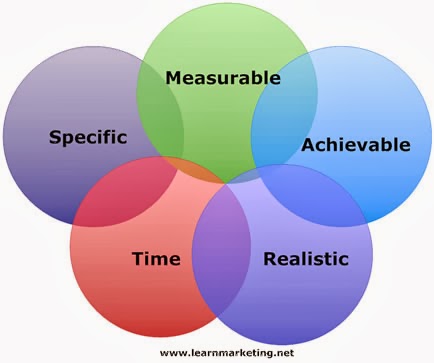
Secondly, the people should set up the objectives for the organisation. Objective is a clearly defined statement of what the organisation want to do and need to to be able to success. The fact, objectives are not just mainly focusing on making profit. Objectives have to be " SMART ". They are ' Specific ', ' Measurable ', ' Achievable ', ' Realistic ' and ' Time based '. As a result of creating " SMART " objectives, the managers will be easier to monitor the progress of the production and to see if they have succeeded. Also the organisations can think about what and why they are doing as they have a plan. 

Structures are important to organisations because adapting organisational structures can improve competitiveness and will in order to increase profitability. Organisational structure is the way in which the roles and responsibilities of management and employees are organised in a business, it determines how decision are made and communication flows. There are few ways of organisational structure which are centralised structure, decentralised structure and delayering. 


Centralisation
Decentralisation
Delayering ( B )


Centralisation, decentralisation and delayering mean all decisions are made by senior managers at the top of the organisation, shares out authority to more junior employees and removing parts of an organisation's hierarchy respectively. 

Centralisational decisions are made by the organisation leaders who have lots of experience of making decisions. Also they are not biased towards any of the department and they don't have to consult anybody else so they can make the best and quickly decisions for the organisation as a whole. As managers get an overview of the whole organisation, so decisions are consistent throughout the organisation. However, not many managers are expert enough to make decisions and excluding employees from decision making can be demotivating. Therefore, there are risks existed.

On the other hand, decentralisation involves in decision making motivations of the employees. Some of the employees can use expert knowledge of their sector in order to make effective decisions. During the decisions are made day to day and without having to ask senior managers so that decisions can be made quickly. Nevertheless, the people who make the decision may not have enough experience and inconsistencies may develop between divisions in an organisation.

Delayering is to reduce the size of an organisation hierarchy, especially in terms of a reduction in management. This creates a flatter ( less layered ) organisational structure. As a result of that, it makes the communication a lot easier and faster. It also motivates staff in having team work and fast responsibilities.

As well as having delayering as one of the examples of management, Henry Mintzberg and Henri Fayal had also stated out the work that managers actually do and managerial activities respectively.

Henry Mintzberg :
  1. Informational 
  • monitor, dissminator and spokesperson
     2. Interpersonal
  •  figurehead, leader and liaison
     3. Decisional
  •  entrepreneur, disturbance handler, resource allocator and negotiator

Henri Fayal :
  1. Forecasting
  •  predicting what might happen in the future
      2. Planning
  •  making a course of action
    3. Organising
  • allocating tasks to separate departments, units, individuals
      4. Commanding
  • providing direction
      5. Coordinating
  • making sure tasks are being carried out and people are working together
      6. Controlling
  • monitoring progress
Management is very important for an organisation because it shows an organisation how to manage its staff and objectives to be able to success. As a good management team deliver good motivations and well organised thus to improve the efficiency of the productivities. For instance, we had an activity of building a tower with marshmallows and spaghetti. We had groups of three to four people in each group and there were four groups. There was a team leader in every groups in order to organise and manage the members in group. A good team leader and management are important because these will make work much easier and will be able to lead to success. As there should be a lot of different ideas of how to build the tower and where to put the marshmallows and spaghetti. Time management is also very important in this activity. As long as the manager was managing the group well, the tower will build up quite strong and tall within a certain time. We can see not many people have this kind of knowledge of managing people because there were only two groups of us was succeed to build up the tower and maintain it.


To conclude, organisations are to satisfy needs by providing people with goods and services. They will try to achieve objectives, use resources, have to be accountable, meet legal requirements and have a formal structure. It is very important that organisations choose a suitable structure such as centralisation, decentralisation and delayering. Each of them have different advantages and disadvantages so organsations should find the best way of being their structure. An effective management is also important for organisations. As long as having good managers, it will be easier for organisations to achieve its objectives.